NEWS
News and updates
The latest press releases, grant announcements, funding news and company updates from Eliptica.
Press release
Eliptica completes measurement of 50,000 UK Biobank plasma proteomes
Eliptica has completed the measurement of 50,000 plasma proteomes from UK Biobank, marking a major milestone in its effort to build population-scale proteomic AI models for earlier disease detection.

Latest updates
All
Company updates
Funding
Grants
Articles
Press releases
Press release
Eliptica completes measurement of 50,000 UK Biobank plasma proteomes
Eliptica has completed the measurement of 50,000 plasma proteomes from UK Biobank, marking a major milestone in its effort to build population-scale proteomic AI models for earlier disease detection.

Grant
Eliptica awarded Innovate UK Biomedical Catalyst funding in 2026
Eliptica has received an Innovate UK Biomedical Catalyst award in 2026, adding to its funding for research in clinical proteomics.

Article
Air pollution exposure in Generation Scotland: molecular fingerprints and health outcomes
Generation Scotland data link air-pollution exposure with health outcomes and molecular signatures measured across epigenetic and proteomic layers.

Article
Performance Characteristics of Zeno Trap Scanning DIA for Sensitive and Quantitative Proteomics at High Throughput
Zeno Trap Scanning DIA is benchmarked as a sensitive, precise and high-throughput approach for quantitative proteomics.
Article
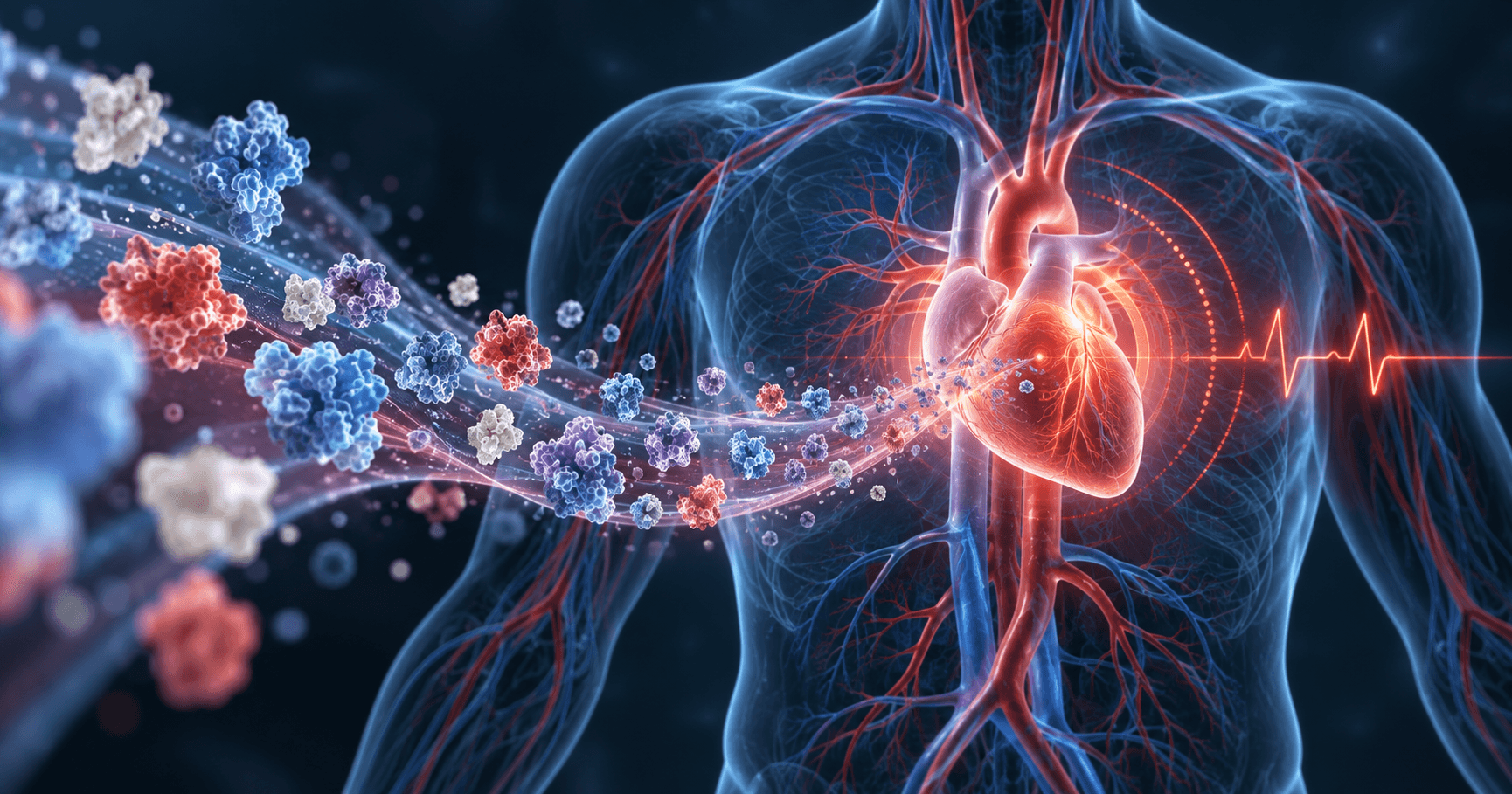
Untargeted Proteomic Profiling Identifies Candidate Biomarkers for Early Detection of Cardiovascular Disease and Mortality
Untargeted serum proteomics identifies candidate predictors of incident cardiovascular disease and mortality in Generation Scotland.

Article
Plasma Proteomics Reveals Distinct Signatures in Occult and Microfilaremic Loa loa Infections
Plasma proteomics distinguishes occult from microfilaraemic Loa loa infection and identifies host-response signatures.

Article
Extensive modulation of the circulating blood proteome by hormonal contraceptive use across two population studies
Two population studies show that hormonal contraceptive use has a substantial and reversible effect on the circulating proteome.

Article
Oxonium ion scanning mass spectrometry for large-scale plasma glycoproteomics
OxoScan-MS enables large-scale, untargeted glycoproteomic analysis directly from plasma and is demonstrated in a clinical cohort.

Article
Quantitative protein biomarker panels: a path to improved clinical practice through proteomics
A clinical perspective explains how quantitative multi-protein panels can improve diagnosis, prognosis and treatment decisions.

Article
A time-resolved proteomic and prognostic map of COVID-19
Longitudinal plasma proteomics maps COVID-19 progression and identifies protein trajectories associated with severity and outcome.

Article
Cost-effective generation of precise label-free quantitative proteomes in high-throughput by microLC and data-independent acquisition
A microflow LC-DIA workflow improves the cost, precision and throughput of label-free quantitative proteomics.

Grant
Eliptica leads £679,134 Innovate UK project for coronary artery disease diagnostics
DCAD brings together proteomics and artificial intelligence to investigate better coronary artery disease diagnostics, supported by a £679,134 total project grant.

Article
AI proteomics: from protein identification to virtual cells
A field-wide review examines how artificial intelligence is reshaping mass-spectrometry proteomics from protein identification to clinical and systems-level applications.

Article
What questions currently beyond reach do you hope systems approaches will enable addressing in the next decade?
Systems-biology leaders outline questions that integrated measurement and modelling may make tractable over the coming decade.

Article
Cross-platform clinical proteomics using the Charité open standard for plasma proteomics (OSPP)
An open peptide standard improves comparability and quality control across plasma-proteomics platforms and laboratories.

Article
A genome-to-proteome map reveals how natural variants drive proteome diversity and shape fitness
A genome-to-proteome map shows how natural genetic variation changes protein abundance and organismal fitness.

Article
Slice-PASEF: Maximising Ion Utilisation in LC-MS Proteomics
Slice-PASEF is introduced to use more available ion signal and improve sensitivity in LC-MS proteomics.

Article
Unique proteome signatures in ICU patients with COVID-19 and delirium: an observational study
Longitudinal plasma proteomics identifies protein signatures associated with delirium in intensive-care patients with COVID-19.

Article
Fast proteomics with dia-PASEF and analytical flow-rate chromatography
Analytical-flow chromatography and dia-PASEF are combined to deliver rapid and robust quantitative proteomics.

Article
The Impact of Acute Nutritional Interventions on the Plasma Proteome
Controlled nutritional interventions reveal which plasma proteins change acutely after feeding and which remain stable.
Article
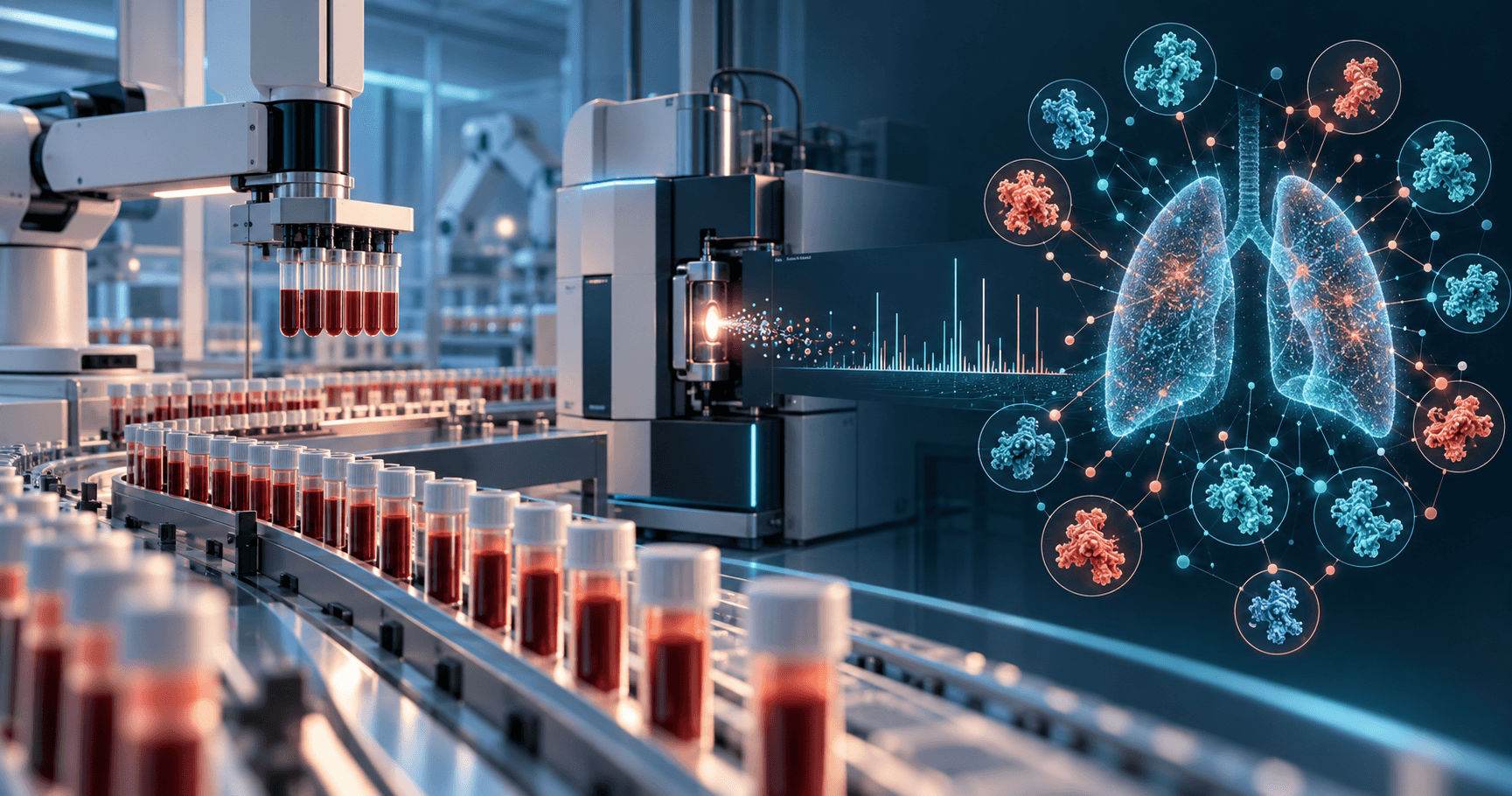
Ultra-fast proteomics with Scanning SWATH
Scanning SWATH accelerates DIA mass spectrometry and supports quantitative proteomics on minute-scale gradients.

Grant
Eliptica leads £696,335 project to predict cancer immunotherapy response
Eliptica and the University of Edinburgh are developing AIPIR, an AI proteomics platform to predict and monitor response to solid tumour immunotherapies.

Article
Genome-wide analysis of 439 mass spectrometry-based proteomic profiles in a population of 15,035 Scottish individuals
A 15,035-person mass-spectrometry study maps the genetic architecture of 439 circulating proteins and links proteins to disease outcomes.

Article
Proteomic biomarkers of cognitive function, APOE ε4 status, and dementia in Generation Scotland
Population-scale mass-spectrometry data are used to investigate circulating protein markers of cognition, APOE ε4 and dementia.

Article
Methylome-wide association studies and epigenetic biomarker development for 133 mass spectrometry-assessed circulating proteins in 14,671 Generation Scotland participants
A 14,671-person study links DNA methylation with 133 circulating proteins measured by mass spectrometry and develops epigenetic predictors.

Article
A standardized framework for circulating blood proteomics
An international framework sets out standards needed to compare and integrate circulating-proteome data across cohorts and platforms.

Article
An INS-1 832/13 β-Cell Proteome Highlights the Rapid Regulation of Fatty Acid Biosynthesis in Glucose-Stimulated Insulin Secretion
Quantitative proteomics maps rapid protein changes in pancreatic β cells during glucose-stimulated insulin secretion.

Article
Menopause Hormone Replacement Therapy and Lifestyle Factors affect Metabolism and Immune System in the Serum Proteome of Aging Individuals
Serum proteomics links ageing, lifestyle and menopause hormone therapy with metabolic and immune-system protein patterns.

Article
Mass spectrometry-based high-throughput proteomics and its role in biomedical studies and systems biology
A review describes how faster, deeper mass-spectrometry workflows are changing biomedical research and systems biology.

Article
A proteomic survival predictor for COVID-19 patients in intensive care
A machine-learning model built from plasma proteins predicts survival in critically ill COVID-19 patients ahead of outcome.
Article
Ultra-High-Throughput Clinical Proteomics Reveals Classifiers of COVID-19 Infection
An automated high-throughput plasma-proteomics platform identifies molecular classifiers of COVID-19 infection and severity.
Press release
Eliptica completes measurement of 50,000 UK Biobank plasma proteomes
Eliptica has completed the measurement of 50,000 plasma proteomes from UK Biobank, marking a major milestone in its effort to build population-scale proteomic AI models for earlier disease detection.
Grant
Eliptica leads £679,134 Innovate UK project for coronary artery disease diagnostics
DCAD brings together proteomics and artificial intelligence to investigate better coronary artery disease diagnostics, supported by a £679,134 total project grant.
Grant
Eliptica leads £696,335 project to predict cancer immunotherapy response
Eliptica and the University of Edinburgh are developing AIPIR, an AI proteomics platform to predict and monitor response to solid tumour immunotherapies.
Grant
Eliptica awarded Innovate UK Biomedical Catalyst funding in 2026
Eliptica has received an Innovate UK Biomedical Catalyst award in 2026, adding to its funding for research in clinical proteomics.
Article
AI proteomics: from protein identification to virtual cells
A field-wide review examines how artificial intelligence is reshaping mass-spectrometry proteomics from protein identification to clinical and systems-level applications.
Article
Genome-wide analysis of 439 mass spectrometry-based proteomic profiles in a population of 15,035 Scottish individuals
A 15,035-person mass-spectrometry study maps the genetic architecture of 439 circulating proteins and links proteins to disease outcomes.
Article
Air pollution exposure in Generation Scotland: molecular fingerprints and health outcomes
Generation Scotland data link air-pollution exposure with health outcomes and molecular signatures measured across epigenetic and proteomic layers.
Article
What questions currently beyond reach do you hope systems approaches will enable addressing in the next decade?
Systems-biology leaders outline questions that integrated measurement and modelling may make tractable over the coming decade.
Article
Proteomic biomarkers of cognitive function, APOE ε4 status, and dementia in Generation Scotland
Population-scale mass-spectrometry data are used to investigate circulating protein markers of cognition, APOE ε4 and dementia.
Article
Performance Characteristics of Zeno Trap Scanning DIA for Sensitive and Quantitative Proteomics at High Throughput
Zeno Trap Scanning DIA is benchmarked as a sensitive, precise and high-throughput approach for quantitative proteomics.
Article
Cross-platform clinical proteomics using the Charité open standard for plasma proteomics (OSPP)
An open peptide standard improves comparability and quality control across plasma-proteomics platforms and laboratories.
Article
Methylome-wide association studies and epigenetic biomarker development for 133 mass spectrometry-assessed circulating proteins in 14,671 Generation Scotland participants
A 14,671-person study links DNA methylation with 133 circulating proteins measured by mass spectrometry and develops epigenetic predictors.
Article
Untargeted Proteomic Profiling Identifies Candidate Biomarkers for Early Detection of Cardiovascular Disease and Mortality
Untargeted serum proteomics identifies candidate predictors of incident cardiovascular disease and mortality in Generation Scotland.
Article
A genome-to-proteome map reveals how natural variants drive proteome diversity and shape fitness
A genome-to-proteome map shows how natural genetic variation changes protein abundance and organismal fitness.
Article
A standardized framework for circulating blood proteomics
An international framework sets out standards needed to compare and integrate circulating-proteome data across cohorts and platforms.
Article
Plasma Proteomics Reveals Distinct Signatures in Occult and Microfilaremic Loa loa Infections
Plasma proteomics distinguishes occult from microfilaraemic Loa loa infection and identifies host-response signatures.
Article
Slice-PASEF: Maximising Ion Utilisation in LC-MS Proteomics
Slice-PASEF is introduced to use more available ion signal and improve sensitivity in LC-MS proteomics.
Article
An INS-1 832/13 β-Cell Proteome Highlights the Rapid Regulation of Fatty Acid Biosynthesis in Glucose-Stimulated Insulin Secretion
Quantitative proteomics maps rapid protein changes in pancreatic β cells during glucose-stimulated insulin secretion.
Article
Extensive modulation of the circulating blood proteome by hormonal contraceptive use across two population studies
Two population studies show that hormonal contraceptive use has a substantial and reversible effect on the circulating proteome.
Article
Unique proteome signatures in ICU patients with COVID-19 and delirium: an observational study
Longitudinal plasma proteomics identifies protein signatures associated with delirium in intensive-care patients with COVID-19.
Article
Menopause Hormone Replacement Therapy and Lifestyle Factors affect Metabolism and Immune System in the Serum Proteome of Aging Individuals
Serum proteomics links ageing, lifestyle and menopause hormone therapy with metabolic and immune-system protein patterns.
Article
Oxonium ion scanning mass spectrometry for large-scale plasma glycoproteomics
OxoScan-MS enables large-scale, untargeted glycoproteomic analysis directly from plasma and is demonstrated in a clinical cohort.
Article
Fast proteomics with dia-PASEF and analytical flow-rate chromatography
Analytical-flow chromatography and dia-PASEF are combined to deliver rapid and robust quantitative proteomics.
Article
Mass spectrometry-based high-throughput proteomics and its role in biomedical studies and systems biology
A review describes how faster, deeper mass-spectrometry workflows are changing biomedical research and systems biology.
Article
Quantitative protein biomarker panels: a path to improved clinical practice through proteomics
A clinical perspective explains how quantitative multi-protein panels can improve diagnosis, prognosis and treatment decisions.
Article
The Impact of Acute Nutritional Interventions on the Plasma Proteome
Controlled nutritional interventions reveal which plasma proteins change acutely after feeding and which remain stable.
Article
A proteomic survival predictor for COVID-19 patients in intensive care
A machine-learning model built from plasma proteins predicts survival in critically ill COVID-19 patients ahead of outcome.
Article
A time-resolved proteomic and prognostic map of COVID-19
Longitudinal plasma proteomics maps COVID-19 progression and identifies protein trajectories associated with severity and outcome.
Article
Ultra-fast proteomics with Scanning SWATH
Scanning SWATH accelerates DIA mass spectrometry and supports quantitative proteomics on minute-scale gradients.
Article
Ultra-High-Throughput Clinical Proteomics Reveals Classifiers of COVID-19 Infection
An automated high-throughput plasma-proteomics platform identifies molecular classifiers of COVID-19 infection and severity.
Article
Cost-effective generation of precise label-free quantitative proteomes in high-throughput by microLC and data-independent acquisition
A microflow LC-DIA workflow improves the cost, precision and throughput of label-free quantitative proteomics.
Press release
Eliptica completes measurement of 50,000 UK Biobank plasma proteomes
Eliptica has completed the measurement of 50,000 plasma proteomes from UK Biobank, marking a major milestone in its effort to build population-scale proteomic AI models for earlier disease detection.
Grant
Eliptica leads £696,335 project to predict cancer immunotherapy response
Eliptica and the University of Edinburgh are developing AIPIR, an AI proteomics platform to predict and monitor response to solid tumour immunotherapies.
Article
AI proteomics: from protein identification to virtual cells
A field-wide review examines how artificial intelligence is reshaping mass-spectrometry proteomics from protein identification to clinical and systems-level applications.
Article
Air pollution exposure in Generation Scotland: molecular fingerprints and health outcomes
Generation Scotland data link air-pollution exposure with health outcomes and molecular signatures measured across epigenetic and proteomic layers.
Article
Proteomic biomarkers of cognitive function, APOE ε4 status, and dementia in Generation Scotland
Population-scale mass-spectrometry data are used to investigate circulating protein markers of cognition, APOE ε4 and dementia.
Article
Cross-platform clinical proteomics using the Charité open standard for plasma proteomics (OSPP)
An open peptide standard improves comparability and quality control across plasma-proteomics platforms and laboratories.
Article
Untargeted Proteomic Profiling Identifies Candidate Biomarkers for Early Detection of Cardiovascular Disease and Mortality
Untargeted serum proteomics identifies candidate predictors of incident cardiovascular disease and mortality in Generation Scotland.
Article
A standardized framework for circulating blood proteomics
An international framework sets out standards needed to compare and integrate circulating-proteome data across cohorts and platforms.
Article
Slice-PASEF: Maximising Ion Utilisation in LC-MS Proteomics
Slice-PASEF is introduced to use more available ion signal and improve sensitivity in LC-MS proteomics.
Article
Extensive modulation of the circulating blood proteome by hormonal contraceptive use across two population studies
Two population studies show that hormonal contraceptive use has a substantial and reversible effect on the circulating proteome.
Article
Menopause Hormone Replacement Therapy and Lifestyle Factors affect Metabolism and Immune System in the Serum Proteome of Aging Individuals
Serum proteomics links ageing, lifestyle and menopause hormone therapy with metabolic and immune-system protein patterns.
Article
Fast proteomics with dia-PASEF and analytical flow-rate chromatography
Analytical-flow chromatography and dia-PASEF are combined to deliver rapid and robust quantitative proteomics.
Article
Quantitative protein biomarker panels: a path to improved clinical practice through proteomics
A clinical perspective explains how quantitative multi-protein panels can improve diagnosis, prognosis and treatment decisions.
Article
A proteomic survival predictor for COVID-19 patients in intensive care
A machine-learning model built from plasma proteins predicts survival in critically ill COVID-19 patients ahead of outcome.
Article
Ultra-fast proteomics with Scanning SWATH
Scanning SWATH accelerates DIA mass spectrometry and supports quantitative proteomics on minute-scale gradients.
Article
Cost-effective generation of precise label-free quantitative proteomes in high-throughput by microLC and data-independent acquisition
A microflow LC-DIA workflow improves the cost, precision and throughput of label-free quantitative proteomics.
Grant
Eliptica leads £679,134 Innovate UK project for coronary artery disease diagnostics
DCAD brings together proteomics and artificial intelligence to investigate better coronary artery disease diagnostics, supported by a £679,134 total project grant.
Grant
Eliptica awarded Innovate UK Biomedical Catalyst funding in 2026
Eliptica has received an Innovate UK Biomedical Catalyst award in 2026, adding to its funding for research in clinical proteomics.
Article
Genome-wide analysis of 439 mass spectrometry-based proteomic profiles in a population of 15,035 Scottish individuals
A 15,035-person mass-spectrometry study maps the genetic architecture of 439 circulating proteins and links proteins to disease outcomes.
Article
What questions currently beyond reach do you hope systems approaches will enable addressing in the next decade?
Systems-biology leaders outline questions that integrated measurement and modelling may make tractable over the coming decade.
Article
Performance Characteristics of Zeno Trap Scanning DIA for Sensitive and Quantitative Proteomics at High Throughput
Zeno Trap Scanning DIA is benchmarked as a sensitive, precise and high-throughput approach for quantitative proteomics.
Article
Methylome-wide association studies and epigenetic biomarker development for 133 mass spectrometry-assessed circulating proteins in 14,671 Generation Scotland participants
A 14,671-person study links DNA methylation with 133 circulating proteins measured by mass spectrometry and develops epigenetic predictors.
Article
A genome-to-proteome map reveals how natural variants drive proteome diversity and shape fitness
A genome-to-proteome map shows how natural genetic variation changes protein abundance and organismal fitness.
Article
Plasma Proteomics Reveals Distinct Signatures in Occult and Microfilaremic Loa loa Infections
Plasma proteomics distinguishes occult from microfilaraemic Loa loa infection and identifies host-response signatures.
Article
An INS-1 832/13 β-Cell Proteome Highlights the Rapid Regulation of Fatty Acid Biosynthesis in Glucose-Stimulated Insulin Secretion
Quantitative proteomics maps rapid protein changes in pancreatic β cells during glucose-stimulated insulin secretion.
Article
Unique proteome signatures in ICU patients with COVID-19 and delirium: an observational study
Longitudinal plasma proteomics identifies protein signatures associated with delirium in intensive-care patients with COVID-19.
Article
Oxonium ion scanning mass spectrometry for large-scale plasma glycoproteomics
OxoScan-MS enables large-scale, untargeted glycoproteomic analysis directly from plasma and is demonstrated in a clinical cohort.
Article
Mass spectrometry-based high-throughput proteomics and its role in biomedical studies and systems biology
A review describes how faster, deeper mass-spectrometry workflows are changing biomedical research and systems biology.
Article
The Impact of Acute Nutritional Interventions on the Plasma Proteome
Controlled nutritional interventions reveal which plasma proteins change acutely after feeding and which remain stable.
Article
A time-resolved proteomic and prognostic map of COVID-19
Longitudinal plasma proteomics maps COVID-19 progression and identifies protein trajectories associated with severity and outcome.
Article
Ultra-High-Throughput Clinical Proteomics Reveals Classifiers of COVID-19 Infection
An automated high-throughput plasma-proteomics platform identifies molecular classifiers of COVID-19 infection and severity.
Stay up to date
Follow Eliptica’s latest announcements, scientific updates and company milestones.