TECHNOLOGY

TECHNOLOGY

Building a foundation model of human plasma biology

Eliptica combines population-scale plasma proteomics with electronic health records and future health outcomes to learn how disease signals are reflected in blood — and translate those into scalable diagnostic tests.

100B+

Data points

50M+

Protein measurements

Protein measurements

100K+

Deeply phenotyped individuals

Early detection

Risk stratification

Monitoring

Preventive pathways

Next generation proteomics

Advanced mass spectrometry

High-throughput mass spectrometry measures plasma proteins and isoforms at absolute abundance, delivering deep, unbiased molecular insight.

Hyperscaling data acqusition

Population-scale biology

Automated robotics and standardised workflows reproducibly profile hundreds of thousands of plasma samples across biobanks and disease cohorts.
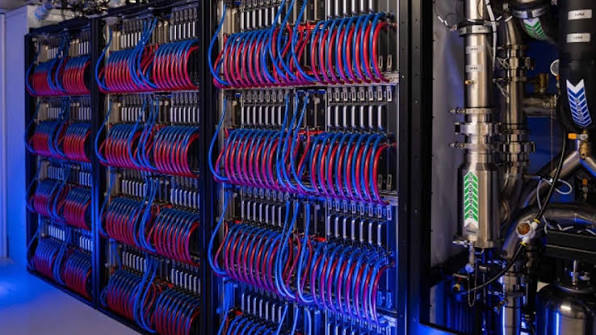
Predicting disease before diagnosis

AI-powered disease forecasting

Models learn disease trajectories from population-scale proteomics and longitudinal health data, revealing signals years before diagnosis.

FOUNDATION MODEL

Learning the biology of disease

Our multimodal model connects plasma proteomics with electronic health records and future outcomes to learn representations of human disease biology and identify signals that precede diagnosis.

DATA INPUTS

Plasma proteomics

Population-scale measurements of thousands of circulating proteins.

Longitudinal health records

Diagnoses, medications, laboratory results and clinical events over time.

Clinical metadata

Age, sex, risk factors, comorbidities and other patient characteristics.

FOUNDATION MODEL

Multimodal health foundation model

Learns representations of disease biology by connecting molecular measurements with longitudinal clinical trajectories.

DIAGNOSTIC OUTPUTS

Early disease detection

Detects the molecular signatures of disease before conventional diagnosis.

Disease prediction

Predicts which major diseases are most likely to emerge over the coming years.

Disease trajectories

Tracks how disease-associated biology changes over time.

Multi-disease detection

One blood measurement can reveal signals associated with multiple major diseases.

Patient stratification

Identifies biologically distinct patient groups for targeted screening and follow-up.

TRANSLATION

From discovery to clinical diagnostics

Our platform turns population-scale biological signals into focused blood tests for
earlier disease detection and monitoring.

01

Discover

Find disease-associated biology

Learn molecular signatures from population-scale proteomic and clinical data.

01

Discover

Find disease-associated biology

Learn molecular signatures from population-scale proteomic and clinical data.

01

Discover

Find disease-associated biology

Learn molecular signatures from population-scale proteomic and clinical data.

02

Validate

Test signals across populations

Confirm that signatures reproduce across independent cohorts and clinical contexts.

02

Validate

Test signals across populations

Confirm that signatures reproduce across independent cohorts and clinical contexts.

02

Validate

Test signals across populations

Confirm that signatures reproduce across independent cohorts and clinical contexts.

03

Translate

Build scalable blood tests

Turn multiple validated disease signatures into multiapplication tests designed for earlier diagnosis, monitoring and clinical decision-making.

03

Translate

Build scalable blood tests

Turn multiple validated disease signatures into multiapplication tests designed for earlier diagnosis, monitoring and clinical decision-making.

03

Translate

Build scalable blood tests

Turn multiple validated disease signatures into multiapplication tests designed for earlier diagnosis, monitoring and clinical decision-making.

BIOLOGICAL GROUNDING

BIOLOGICAL GROUNDING

Why medical AI needs biological measurement

Why medical AI needs biological measurement

Clinical records describe what healthcare has observed.
Plasma proteomics reveals the biological imprint of the past, the present physiological state, and
molecular changes that may anticipate future disease.

Clinical records describe what
healthcare has observed.
Plasma proteomics reveals the biological imprint of the past, the present physiological state, and molecular changes that may anticipate future disease.

Clinical records describe what healthcare has observed.
Plasma proteomics reveals the biological imprint of the past, the present physiological state, and
molecular changes that may anticipate future disease.

Measures biology directly

Thousands of circulating proteins provide a quantitative snapshot of the patient’s current biological state.

Measures biology directly

Thousands of circulating proteins provide a quantitative snapshot of the patient’s current biological state.

Measures biology directly

Thousands of circulating proteins provide a quantitative snapshot of the patient’s current biological state.

Detects disease earlier

Molecular changes emerge before symptoms predating medical records.

Detects disease earlier

Molecular changes emerge before symptoms predating medical records.

Detects disease earlier

Molecular changes emerge before symptoms predating medical records.

Grounds AI in physiology

Proteomic measurements anchor models to biology rather than relying only on patterns in health records alone.

Grounds AI in physiology

Proteomic measurements anchor models to biology rather than relying only on patterns in health records alone.

Grounds AI in physiology

Proteomic measurements anchor models to biology rather than relying only on patterns in health records alone.

Enables new diagnostics

Population-scale biological models combined with clinical AI create a uniquely powerful platform for disease detection and diagnosis.

Enables new diagnostics

Population-scale biological models combined with clinical AI create a uniquely powerful platform for disease detection and diagnosis.

Enables new diagnostics

Population-scale biological models combined with clinical AI create a uniquely powerful platform for disease detection and diagnosis.